Plastic wrap seems like the perfect kitchen shortcut — a quick stretch over a bowl and your leftovers are sealed. But microbiologists and toxicologists are clear: this everyday habit comes with real chemical risks, especially when fatty foods are involved. Here's what actually happens when plastic wrap touches your food.
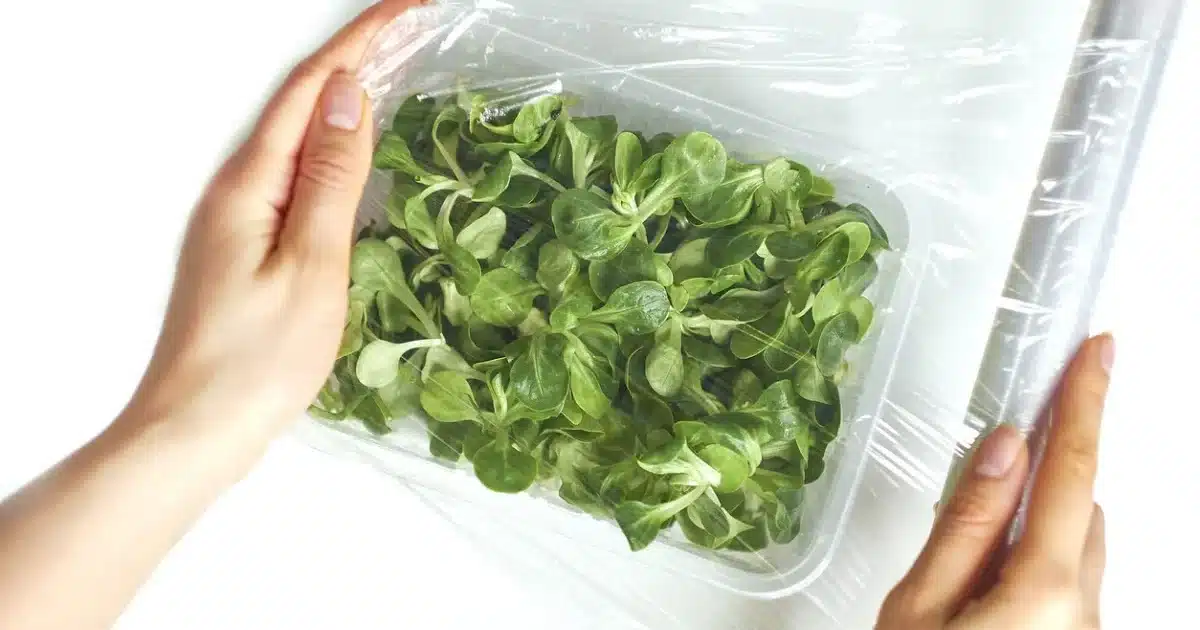
It's one of those reflexes so deeply ingrained in home cooking that nobody questions it. You finish making a rich béchamel for a lasagna, cover the dish with plastic wrap, and slide it into the fridge. Simple, fast, practical. But that roll of PVC film sitting in your kitchen drawer may be doing more than just preserving food.
Experts in food safety and toxicology have been raising concerns about plastic wrap for years, and the science behind those concerns deserves a closer look.
Plastic wrap contains chemicals that migrate into food
Christophe Mercier-Thellier, microbiologist and hygienist, stated clearly in Maison & Travaux that plastic wrap is made from PVC (polyvinyl chloride), a material that requires the addition of various chemical compounds to become flexible and functional. Among these compounds: phtalates, classified as powerful endocrine disruptors.
How phthalates get into your food
The mechanism is straightforward and documented. Fat acts as a solvent. When fatty foods — think cheese, meat, oily dressings, cream-based sauces — come into direct contact with plastic wrap, the lipids extract the phthalates from the film. These molecules then migrate directly into what you're about to eat.
Stéphane Firmin, a lecturer and researcher in toxicology interviewed by Notre Temps, reinforces this point: it's not just phthalates. The additives incorporated into the plastic during manufacturing also migrate into food. And beyond chemical additives, small polymer fragments can physically detach from the film and pass into the food itself.
Phthalates are classified as potent endocrine disruptors. They interfere with hormonal systems and are particularly concerning when ingested regularly through contaminated food.
The problem isn't limited to one type of dish. Any food with a significant fat content triggers this migration. That includes a leftover roasted chicken wrapped in the fridge, a bowl of vinaigrette-dressed salad covered before serving, or a pan of béchamel waiting to be used the next day.
The microwave makes things significantly worse
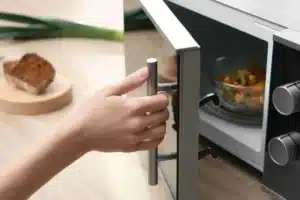
Most people intuitively understand that heat and plastic don't mix well. But the reality is more nuanced than a simple rule. Some plastic wraps are specifically manufactured for use in microwave ovens or even in boiling water. The key is the labeling — and most consumers never read it.
What the packaging actually says
Manufacturers themselves indicate on the underside of the box that their film should not be used in direct contact with fatty foods. This warning is there. But it's printed in small type, on the bottom, and rarely consulted. Concrètement, most people using plastic wrap have never read these instructions.
When an unmarked plastic wrap is placed over a fatty dish and heated in the microwave, the combination of heat and fat dramatically accelerates molecular migration. Polymer contaminants that would transfer slowly at refrigerator temperatures move much faster under heat. And every wrapping, regardless of temperature, causes some degree of molecular migration — the question is always one of quantity and context.
Not all plastic wraps are identical. Some are specifically designed for microwave use or contact with boiling water. Always check the underside of the packaging before use — the usage restrictions are listed there.
The issue with black plastic utensils follows the same logic: certain plastic materials, especially when heated or in contact with fatty substances, release chemical compounds into food. Plastic wrap is simply the most widespread example of a broader problem with plastic-to-food contact.
Safer alternatives for storing food at home
Reducing plastic wrap use doesn't require a complete kitchen overhaul. The alternatives are accessible, reusable, and in many cases more effective for long-term storage.
Airtight glass jars as the first choice
Hermetic glass jars are the most straightforward replacement. Glass is chemically inert — it does not interact with food, regardless of fat content, acidity, or temperature. A homemade chocolate mousse stored in a sealed glass container stays fresh without any risk of chemical contamination. The same goes for sauces, soups, or any fatty preparation.
Aluminum foil as a conditional option
Aluminum foil is a valid alternative for covering dishes, with one important condition: do not heat it. Used cold, as a cover in the refrigerator, aluminum foil doesn't present the same migration risks as PVC film. But it should never go into the microwave or be used to wrap acidic or very salty foods directly.
Beyond these two main options, the broader recommendation from food safety experts is simple: reduce the overall use of plastic packaging and shorten the time food spends in contact with any plastic material. Single-use plastic wrap, by its very nature, is designed for maximum contact with food surfaces — which makes it one of the more problematic plastic items in a standard kitchen.
Avoid plastic wrap on fatty foods (meat, cheese, cream sauces, vinaigrettes). Never heat it unless the packaging explicitly states it is microwave-safe. Switch to airtight glass containers for regular food storage.
The habit of reaching for plastic wrap is hard to break precisely because it's so convenient. But the chemistry is not on its side. Fatty foods stored under PVC plastic wrap absorb phthalates and other plastic additives — and those compounds don't belong on the dinner table. Switching to glass containers for storing leftovers or using aluminum foil correctly are small changes that eliminate a real and avoidable source of chemical exposure in everyday cooking.