Grilling frozen meat directly on the barbecue is not only possible — it's safe, provided you follow a precise two-temperature method. The key is controlling the heat, choosing the right cuts, and knowing exactly when to season.
You forgot to take the meat out of the freezer. The guests arrive in two hours. Sound familiar? The good news is that cooking frozen meat on the barbecue is a perfectly viable option, as long as you understand what's happening inside those frozen fibers and adjust your technique accordingly.
The bad news is that improvising with a raging fire and a rock-solid chicken breast is a recipe for disaster. Charred outside, raw inside — nobody wants that at a cookout.
Cooking frozen meat on the barbecue is safe, but technique matters
The core concern with grilling frozen meat is temperature distribution. When you place a frozen piece of beef, lamb, or pork over intense heat, the exterior cooks rapidly while the center remains frozen for far longer than you'd expect. Rushing the process by cranking up the heat doesn't solve the problem — it makes it worse.
That said, the method itself carries no inherent health risk. Cooking frozen meat on the barbecue is entirely safe for consumption, provided the internal temperature reaches the correct threshold for each type of meat. The danger isn't the freezing — it's undercooking.
Never rely on color alone to judge doneness with frozen meat. The exterior can look perfectly grilled while the center remains dangerously undercooked. A meat thermometer is non-negotiable here.
Why thick cuts are a problem
Thick, irregular cuts like roasts or bone-in pieces create an uneven cooking environment that makes the two-zone technique nearly impossible to control. The recommendation is clear: reserve this method for flat, thin cuts. Chipolatas, merguez, thin beef steaks, lamb chops — these work. A frozen pork shoulder does not.
The charcoal problem
Barbecue à charbon (charcoal grills) make temperature control significantly harder than gas grills. With charcoal, you can't dial in precise zones with the same reliability. A gas barbecue is strongly preferred for grilling frozen meat because it allows you to set one burner to 300°C and another to 100°C simultaneously — which is exactly what this technique requires.
The two-zone method: the only reliable approach
The principle is straightforward. High heat creates the crust. Low heat finishes the job without burning the outside.
Here's how it works in practice:
- Light the gas barbecue and set one side to 300°C (high heat) and the other to 100°C (low heat).
- Grease the grill surface with sunflower oil — its high smoke point makes it ideal for this application.
- Place the frozen meat directly on the high-heat side.
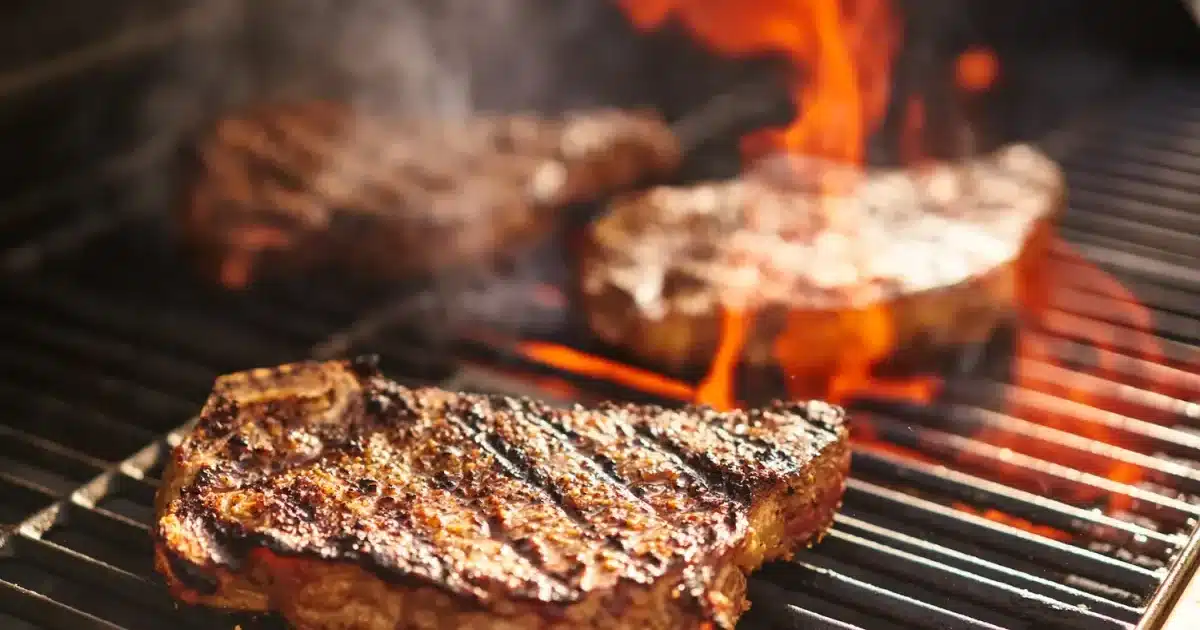
- Grill for 60 to 90 seconds to achieve surface coloration and a proper sear.
- Move the meat to the low-heat zone and continue cooking until the internal temperature is reached.
- Use a cooking probe to monitor the core temperature throughout.
This two-step approach mimics what professional kitchens call "reverse searing" — except here, you're starting from a frozen state rather than a chilled one. The logic is the same: build the crust first, then let gentle heat penetrate to the center without destroying the exterior.
on high heat (300°C) to sear frozen meat before finishing on low heat
The internal temperatures you need to hit
This is where most home grillers go wrong. Each type of meat has a specific minimum core temperature, and guessing is not an option when cooking from frozen. A quality meat thermometer or cooking probe makes all the difference between a safe, juicy result and a health risk.
| Meat type | Minimum internal temperature |
|---|---|
| Beef | 45°C |
| Lamb & veal | 55°C |
| Pork | 65°C |
| Poultry | 70°C |
Poultry demands the most attention. At 70°C minimum, chicken and turkey require the longest time on the low-heat zone — and they're also the most unforgiving if undercooked. If you're planning a barbecue with crispy homemade chicken as a reference for what properly cooked poultry should look and feel like, that texture is your target.
Beef is the most forgiving at 45°C, which is why a thin frozen steak is one of the easiest cuts to handle with this technique. Lamb and veal sit in the middle at 55°C, while pork at 65°C needs careful monitoring.
The seasoning rule that most people ignore
Cold meat repels seasoning. This is a physical reality, not a stylistic preference. When meat is frozen or still very cold, salt and spices simply don't adhere to the surface. The moisture locked in ice crystals prevents any meaningful absorption, and the seasoning ends up burning off on the grill before it can do anything useful.
The fix is simple but requires patience: wait until the meat has warmed up on the grill before seasoning. Once the surface temperature rises and the exterior begins to release some moisture, salt and spices will adhere properly and penetrate the surface as intended.
This also means you shouldn't try to marinate frozen meat before grilling — the marinade can't penetrate a frozen surface. Season during cooking, not before.
What about thawing first?
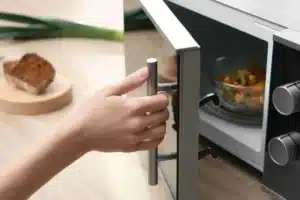
If time allows, a 3-hour thaw at room temperature is a reasonable middle ground. But thawing too quickly — especially under hot water or in a microwave — alters the texture and degrades the gustatory qualities of the meat. The cellular structure breaks down unevenly, releasing moisture that was supposed to stay inside during cooking. Slow thawing in the refrigerator overnight is always the gold standard, but the frozen-to-grill method is a legitimate alternative when time is short.
Much like understanding which foods should never go in the refrigerator, knowing how temperature affects food at every stage — storage, thawing, cooking — is what separates confident cooking from guesswork. And if you're curious about other freezing questions, the rules around freezing smoked salmon follow a similarly precise logic worth understanding before your next gathering.
The bottom line: grilling frozen meat on the barbecue works. But it demands a gas grill, two heat zones, a cooking probe, and the discipline to season at the right moment. Skip any of those steps, and you're gambling with both flavor and food safety.