
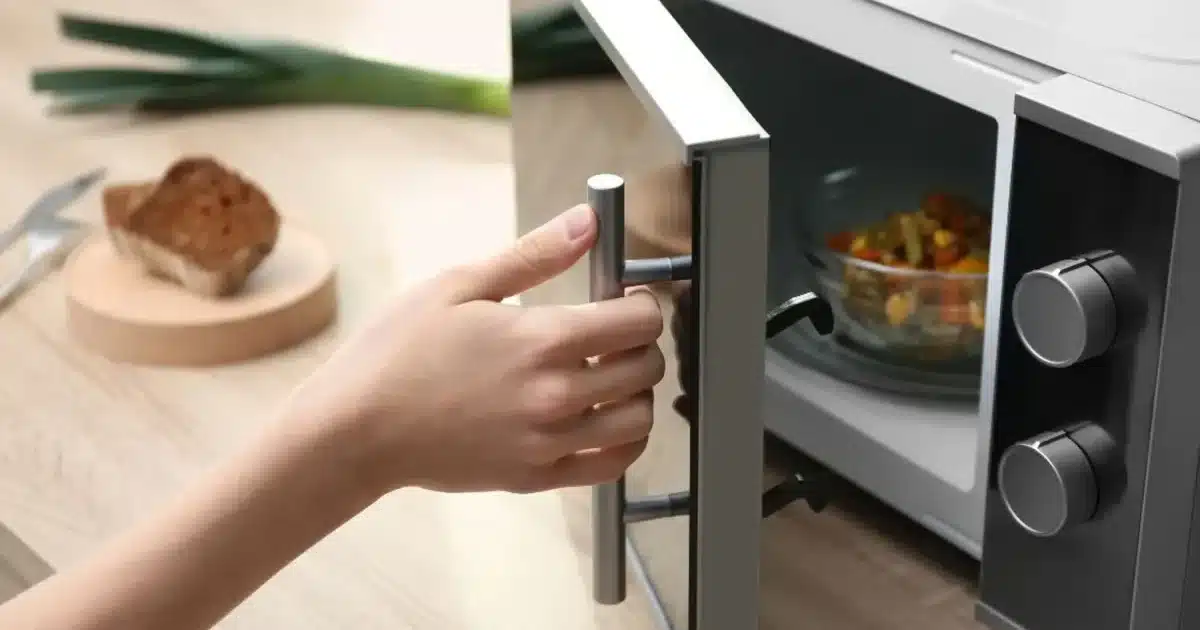
Cling film in the microwave is a combination that seems harmless but carries real health risks. That thin, transparent plastic wrap — used daily in both home and professional kitchens — can release harmful chemical substances directly into your food when exposed to heat. Here's what you need to know before your next reheating session.
Stretch wrap, plastic film, cellophane — whatever you call it, cling film is one of the most common tools in any kitchen. It keeps food fresh, blocks moisture, and protects against outside contaminants. But the moment it meets the heat of a microwave, the equation changes completely.
The reflex is understandable: you want to cover a dish to avoid splatters, retain moisture, and prevent your leftovers from drying out. And yet, that simple gesture may expose you to substances that have no place near your food.
Cling film in the microwave releases potentially toxic chemicals
The core problem with plastic wrap and microwave heat comes down to chemistry. Standard cling film is manufactured with additives that give it flexibility and cling — and two of those additives are phtalates and Bisphenol A (BPA). Both are classified as endocrine disruptors, meaning they interfere with the hormonal system of the body. There is also a suspected link between these substances and certain forms of cancer.
What happens when plastic heats up
When cling film is exposed to the heat generated inside a microwave, these chemical compounds can migrate out of the plastic and into the food beneath or in contact with it. This phenomenon, known as chemical migration, is not hypothetical — it is a recognized process in food safety science. The higher the temperature, the more significant the transfer. And microwaves, by design, generate intense, concentrated heat.
The risk is not limited to direct contact either. Even when the film is stretched across the top of a bowl without touching the food, steam and heat create conditions that accelerate the release of these substances into the surrounding air and onto food surfaces.
Phtalates and BPA are endocrine disruptors. Repeated exposure through heated plastic wrap may contribute to hormonal disruption and has been linked to cancer risk in ongoing research.
The everyday habit that's worth reconsidering
This is not a rare or extreme use case. Millions of people cover dishes with plastic stretch wrap before microwaving every single day, in home kitchens and in food service settings alike. The habit feels practical and low-stakes. But the cumulative effect of repeated exposure to these migrating compounds is exactly what makes it worth rethinking — especially for children and people with hormonal sensitivities. The same logic applies to other kitchen safety questions, like whether you can cook frozen meat directly on the barbecue — small decisions that seem trivial but carry real food safety implications.
Safe alternatives to plastic wrap in the microwave
Avoiding cling film in the microwave does not mean accepting dry, splattered food every time you reheat a dish. Several practical, widely available alternatives do the job just as well — without the chemical risk.
Earthenware plates and glass lids
The simplest option is also the most accessible: a faience plate placed upside down over your dish. Earthenware and ceramic materials do not release toxic substances when heated, making them a safe and immediate substitute. They trap steam, keep food moist, and cost nothing extra if you already have them in your cupboard.
Glass lids specifically designed for microwave use are another solid option. They are reusable, easy to clean, and completely free of harmful substances. Many are sold with a small vent to allow steam to escape, which prevents pressure buildup. Ceramic lids serve the same purpose and are equally safe.
- Faience / earthenware plate placed on top of the dish
- Microwave-safe glass lid (with or without steam vent)
- Ceramic lid designed for microwave use
- Standard plastic cling film / stretch wrap
- Any plastic not labeled microwave-safe
- Aluminum foil (blocks microwaves entirely)
Why covering your dish still matters
Skipping the cover altogether is not the ideal solution. Without any protection, food loses moisture rapidly in the microwave, leading to dry textures and uneven reheating. A good cover also contains splatters, which keeps the appliance cleaner and reduces cleanup time. The goal is simply to replace plastic wrap with a material that handles heat safely. Whether you're reheating a hearty portion of homemade miso soup with vegetables and tofu or warming up last night's pasta, a glass or ceramic cover does the job without compromise.
Reading labels: not all plastic films are equal
One nuance worth addressing: some plastic films are specifically marketed as microwave-safe. These products are formulated differently, with reduced levels of the most problematic additives. But "microwave-safe" labeling is not a universal guarantee of zero chemical migration — it typically means the material will not melt or deform, not necessarily that it is entirely inert at high temperatures.
The safest approach remains switching to non-plastic alternatives entirely. Glass and ceramic are chemically stable under heat, do not degrade with repeated use, and present no known migration risk. They are also more durable and environmentally friendlier than single-use cellophane wrap. And if you enjoy cooking at home — whether it's a quick weeknight dinner or something more elaborate like crispy tofu with peanut sauce — investing in a couple of microwave-safe glass lids is one of the simplest upgrades you can make to your kitchen routine.
Replace plastic cling film with a faience plate, a microwave-safe glass lid, or a ceramic cover. These options protect your food from drying out — without the risk of BPA or phtalate migration.
The answer to the question is clear: standard cling film does not belong in the microwave. The combination of plastic wrap and microwave heat creates conditions for BPA and phtalates to migrate into food, with potential hormonal and carcinogenic consequences. Safer options exist, they are affordable, and they work just as well. Switching is straightforward — and your health is worth that small adjustment.