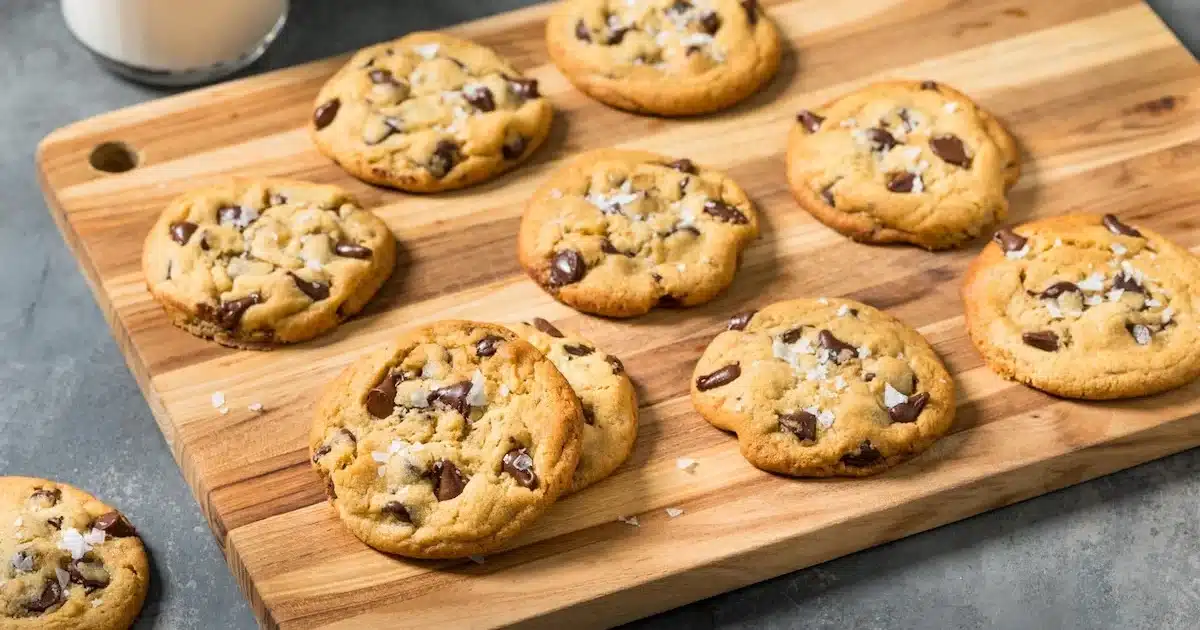
Soft, chewy in the center, golden and crispy on the edges: these homemade chocolate chip cookies come together in 12 minutes of baking and require just a handful of pantry staples. One batch yields a dozen cookies, and the recipe works for kids, adults, and anyone who struggles to stop at one.
There's a reason homemade cookies never go out of style. The smell alone, drifting from the oven, is enough to pull everyone into the kitchen. But beyond the nostalgia, this particular recipe earns its place because it nails the texture problem that plagues so many batches: too cakey, too flat, too dry. These soft cookies with crispy edges hit the sweet spot every single time.
And the method is genuinely simple. No chilling the dough overnight, no stand mixer required, no obscure ingredients. Just technique, a few smart choices, and 12 minutes at 180°C.
The secret to soft cookies with crispy edges lies in the butter and sugar
This is where most homemade cookie recipes go wrong, and where this one gets it exactly right.
Why butter temperature changes everything
Beurre pommade (softened butter at room temperature) is non-negotiable here. Using 120 g of butter that's genuinely soft, not melted, not cold, creates a creamy base that holds air when beaten with the sugars. Melted butter collapses that structure entirely, producing a greasy, flat cookie with no chew. If you've ever wondered how to get your butter to the right consistency quickly, the glass method for softening butter in seconds is a game-changer worth knowing.
The dual-sugar combination
The recipe calls for two types of sugar: 50 g of white sugar and 50 g of cassonade or vergeoise (brown sugar or muscovado). This isn't arbitrary. White sugar promotes spread and crispiness at the edges. Brown sugar, which contains molasses, retains moisture and delivers chew. Used together in equal parts, they produce the signature contrast: crispy border, soft center. That balance is the whole point of the recipe.
Vergeoise (a Belgian-style brown sugar) gives a slightly deeper, more caramel-like flavor than standard cassonade. Either works, but vergeoise adds an extra layer of complexity if you can find it.
The full recipe: ingredients and steps for a dozen cookies
The complete ingredient list for approximately 12 cookies:
- 120 g softened butter (pommade, never melted)
- 50 g white sugar
- 50 g cassonade or vergeoise
- 1 large egg
- 180 g all-purpose flour
- 100 g chocolate chips (or roughly chopped chocolate bar for larger chunks)
Step-by-step preparation
Start by beating the softened butter with both sugars until the mixture is pale and genuinely creamy, not just combined. Add the egg and mix again until smooth. Incorporate the flour progressively, stirring until the dough is homogeneous and pulls away cleanly from the sides of the bowl. Fold in the 100 g of chocolate chips.
Form balls of roughly equal size, place them on a baking sheet lined with parchment paper, and leave space between each one. They will spread. Bake at 180°C for exactly 12 minutes.
The cookies will look underdone when they come out. That's correct. They firm up as they cool, and pulling them out while the center still looks soft is what guarantees the chewy texture. The moment they come out of the oven, scatter a few flakes of fleur de sel over the top. The salt amplifies the chocolate flavor in a way that's hard to explain and impossible to skip once you've tried it.
Let them cool on the tray for at least 10 minutes before eating. The wait is genuinely worth it.
baking time for perfectly soft, crispy-edged cookies
Variations and storage tips to make the most of the batch
Customizing the chocolate chip cookie recipe
The base recipe is a platform, not a constraint. Replacing standard chocolate chips with roughly chopped chocolate bar pieces creates irregular chocolate chunks that melt into pockets rather than dots, which changes the eating experience significantly. Mixing dark, milk, and white chocolate in the same batch gives each cookie a slightly different character.
For texture contrast, crushed hazelnuts work particularly well alongside the chocolate, adding a nutty crunch that plays against the soft dough. This kind of variation keeps the recipe interesting across multiple bakes, and given that these cookies disappear fast, multiple bakes are essentially inevitable. If you enjoy experimenting with chocolate-based baking, the brownie-cookie hybrid recipe is another direction worth exploring.
Storing homemade cookies properly
Baked cookies keep well for 2 to 3 days in an airtight container at room temperature. Beyond that, the texture deteriorates noticeably. But the smarter move for anyone who wants cookies on demand without the effort is to freeze the raw dough. Shape the dough into balls, freeze them on a tray until solid, then transfer to a freezer bag. When a craving hits, bake straight from frozen, adding a couple of extra minutes to the cooking time.
Freezing raw dough balls means you always have fresh cookies available in under 15 minutes. No thawing required — bake directly from frozen at 180°C.
This recipe also fits naturally into a broader repertoire of fast homemade baking. If quick desserts are a regular need, the roundup of easy desserts ready in under 20 minutes covers a lot of ground beyond cookies, from chocolate lava cakes to fruit-based options. And for a snack that leans slightly healthier while staying just as quick, yogurt and blueberry muffins are worth adding to the rotation.
The recipe itself is explicitly described as addictive by those who've made it, and that warning is worth taking seriously. A dozen cookies sounds like plenty. It rarely is.