Shredded beef slow-cooked for up to 3 hours, pulled apart with two forks, and served over buttery crushed potatoes with a rich braising sauce. This is the kind of recipe from Guillaume Marinette that turns a humble cut of beef into something genuinely unforgettable.
There are dishes that demand patience, and dishes that reward it. This shredded beef with homemade mashed potatoes belongs firmly in the second category. The technique is simple, the ingredients are affordable, and the result is a plate that feels like it came out of a serious kitchen.
The secret is time. Not skill, not expensive equipment. Just a heavy pot, a low flame, and the willingness to let the meat do its thing.
Choosing the right cut of beef for slow braising
Not every cut of beef behaves the same way under heat. For shredded beef, you need a cut rich in collagen and connective tissue. That's exactly what chuck (paleron) and blade (macreuse) deliver. Both are typically affordable, widely available, and completely transform after a long, slow braise.
Chuck roast in particular is the gold standard for this kind of cooking. The collagen breaks down over time, turning what would otherwise be a tough, chewy piece of meat into something that pulls apart effortlessly with two forks. The 1 kg of beef called for here serves 4 people generously, making it a practical choice for a family dinner or a weekend gathering.
Ask your butcher specifically for chuck or blade cut. These braising cuts are often cheaper than premium steaks but produce far superior results in a slow-cooked dish like this one.
If you enjoy comforting, slow-cooked meals like this, the 15 creamy chicken recipes for easy dinners on this site offer a similar spirit, with the same emphasis on depth of flavor and relaxed cooking.
The braising method that makes the beef ultra-tender
Searing first, then building the base
The process begins with a filet of olive oil in a hot cocotte. The beef goes in first, seared on every face until a deep, caramelized crust forms. This step is not decorative. It creates the foundation of flavor that will carry through the entire dish. Once the meat is reserved, 2 onions (sliced) and 3 carrots (cut into rounds) go straight into the same pot, absorbing every bit of those meat juices. Then 2 cloves of garlic, finely chopped, and 1 bouquet garni are added.
The braise itself
The beef returns to the pot. 25 cl of red wine goes in first, followed by 50 cl of beef stock. The lid goes on, the heat drops to very low, and the waiting begins. Between 2 and 3 hours of gentle simmering is what transforms this cut from tough to extraordinary. The sauce reduces slowly, concentrating into something intense and deep. The vegetables soften and melt into the liquid, adding body without any thickening agent.
Resist the urge to rush this step. Turning the heat up to save time will tighten the muscle fibers rather than relax them, and you'll lose the melt-in-your-mouth texture that defines this dish. This is the same principle behind other comforting slow-cooked recipes, like the ones featured in 10 recipes like grandma's.
Making the perfect crushed potato side dish
Agata or Monalisa: the right variety matters
The écrasé de pommes de terre, or rustic crushed potatoes, is not a smooth, airy purée. It's deliberately textured, with chunks and irregularities that give it character. For this, variety selection matters. Agata and Monalisa are the two recommended options here. Both are waxy potatoes with a firm, slightly buttery flesh that holds up during boiling and crushes beautifully without turning gluey.
800 g of potatoes go into generously salted boiling water and cook for around 25 minutes, until a knife slides through without resistance.
Crushing, not blending
Once drained, the potatoes are crushed with a fork rather than passed through a ricer or blended. 50 g of butter is incorporated while the potatoes are still hot, along with salt and pepper to taste. The result is an onctueux, rustic side that pairs perfectly with the braised beef. It absorbs the sauce brilliantly, which is exactly the point.
If you love working with potatoes in creative ways, these cheese potato croquettes with just 4 ingredients are worth a look for your next side dish.
of slow braising for beef that pulls apart with two forks
Plating and serving the shredded beef
Once the beef has rested and cooled slightly in its braising liquid, it's time to pull it apart. Two forks are all you need. Work against the grain of the meat, pulling in opposite directions. The fibers separate naturally, producing long, silky strands of ultra-tender braised beef.
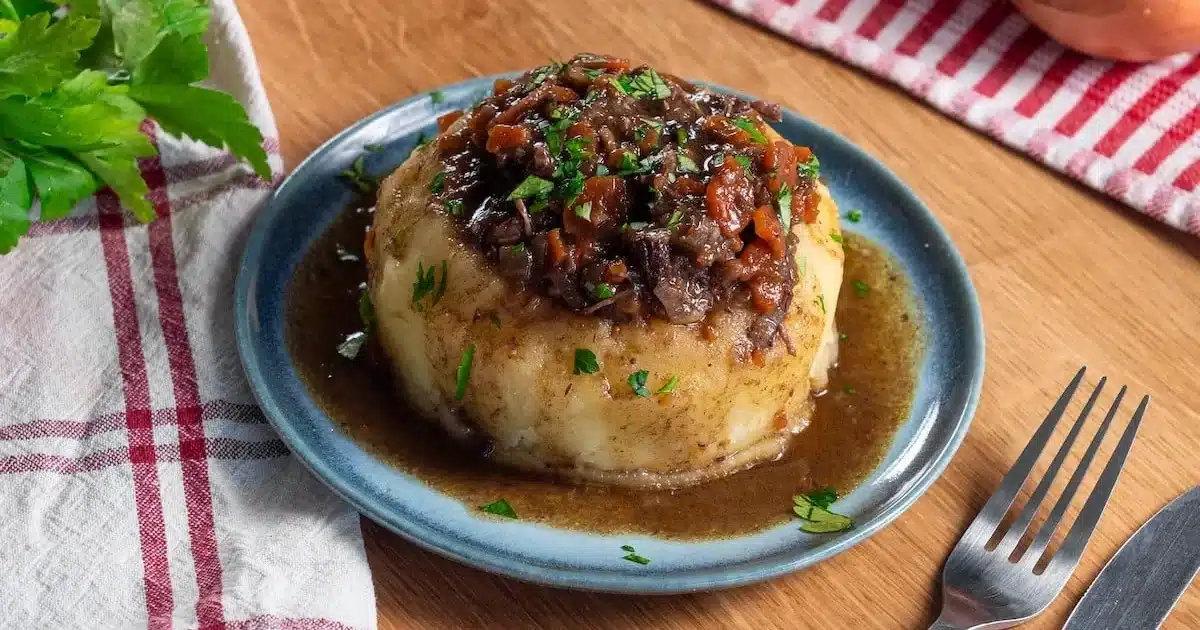
To plate, Guillaume Marinette uses a ring mold (emporte-pièce) to shape and compact the crushed potatoes into a neat cylinder at the center of the plate. The shredded beef is piled on top. The braising sauce, strained or left rustic with its vegetables, is spooned generously over everything. A finishing touch of fresh chopped parsley adds color and a faint herbal brightness that cuts through the richness of the dish.
The sauce deserves special attention. After hours of reduction, it carries the combined flavors of the beef, wine, aromatics, and vegetables into a single, concentrated liquid that ties the whole plate together. Don't skip it.
This recipe serves 4 people and requires 1 kg of chuck or blade beef, 800 g of Agata or Monalisa potatoes, red wine, beef stock, and a handful of aromatics. The total active prep time is minimal — the oven does the rest.
This is the kind of dish that also makes excellent leftovers. The shredded beef reheats gently in its sauce, and the flavors actually deepen overnight. If you're cooking for a crowd or planning ahead, it's one of the most reliable affordable and delicious recipe ideas you can keep in rotation. Slow cooking has always been the great equalizer in the kitchen: modest ingredients, serious results.